How it works
Immersion in a story world the child reads aloud — over a model that reads the child.
Most English learning happens on a page that asks nothing back. Children read words, fill in blanks, take tests, and build a private vocabulary that lives quietly inside their heads. The one thing they do least is the thing language is for — saying it out loud, to someone, in real time.
So Outloud is an immersion course, not a worksheet. The child meets a cast and a world, follows a real story, and speaks their way through it, with every word arriving in context. The teaching is hidden inside the telling.
The shape of an episode
An episode is an eighteen-panel picture story — twenty-two to twenty-four at a season's climax. It runs on the oldest frame in children's storytelling: home, away, home again. The day starts ordinary, something tips it off its track, the children go out into it, and they come back to the kitchen changed by a little.
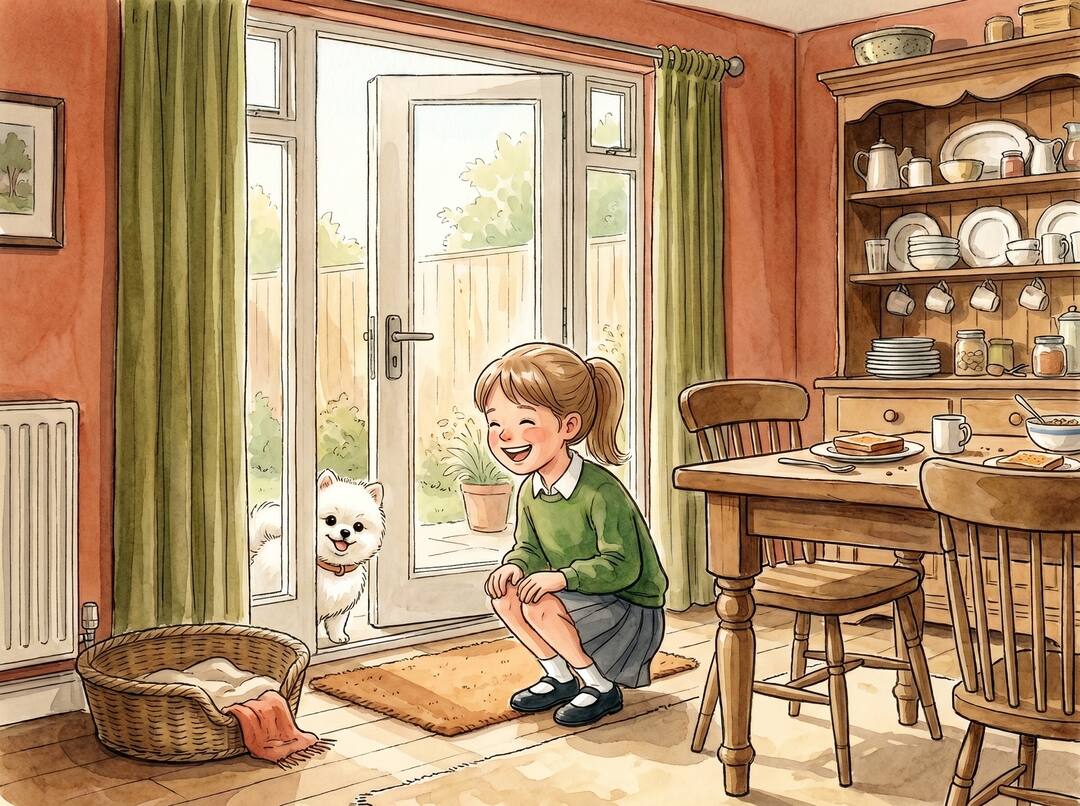
Home Panels 1–4
The ordinary morning. Who everyone is, where we are.
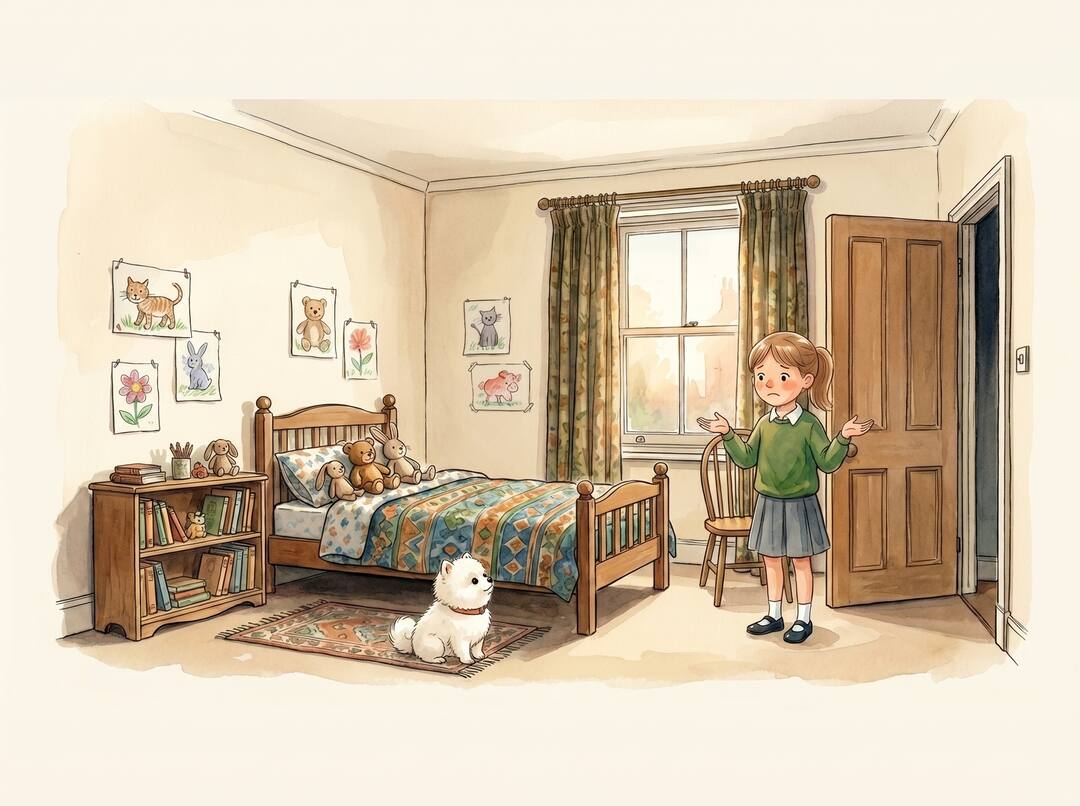
Away Panels 5–9
Something tips the day off its track. The children go out into it.
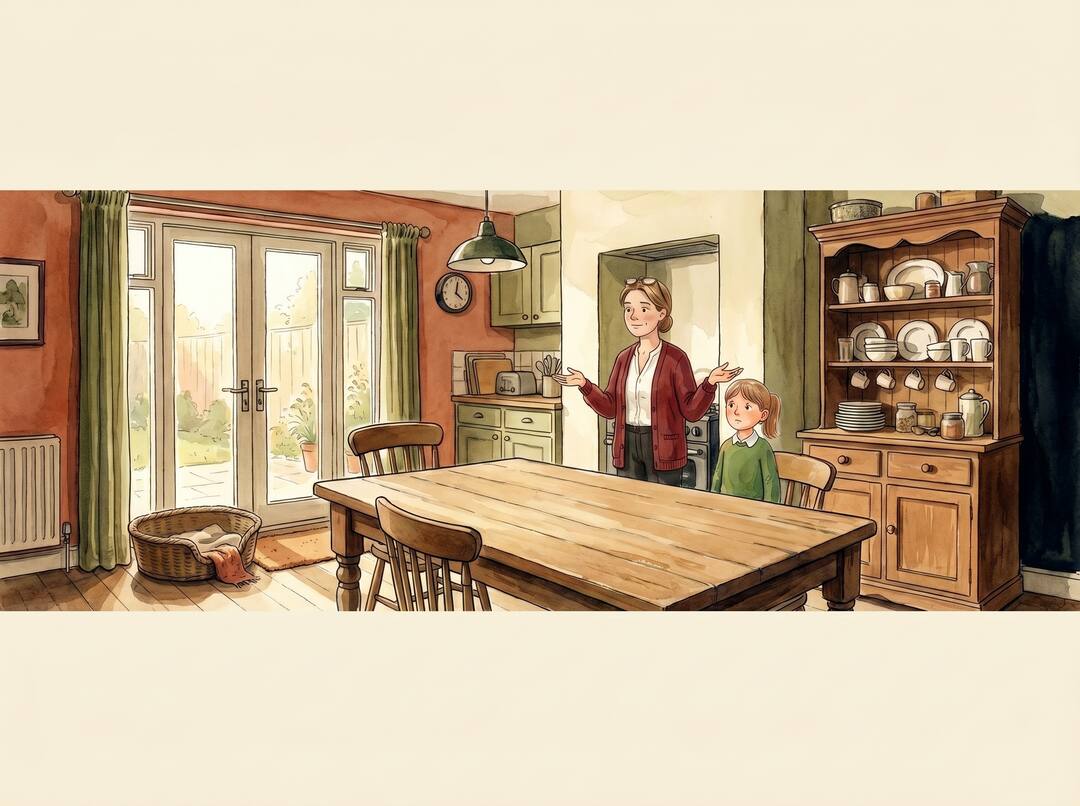
The turn Panels 10–14
The middle of the trouble — and the small idea that fixes it.
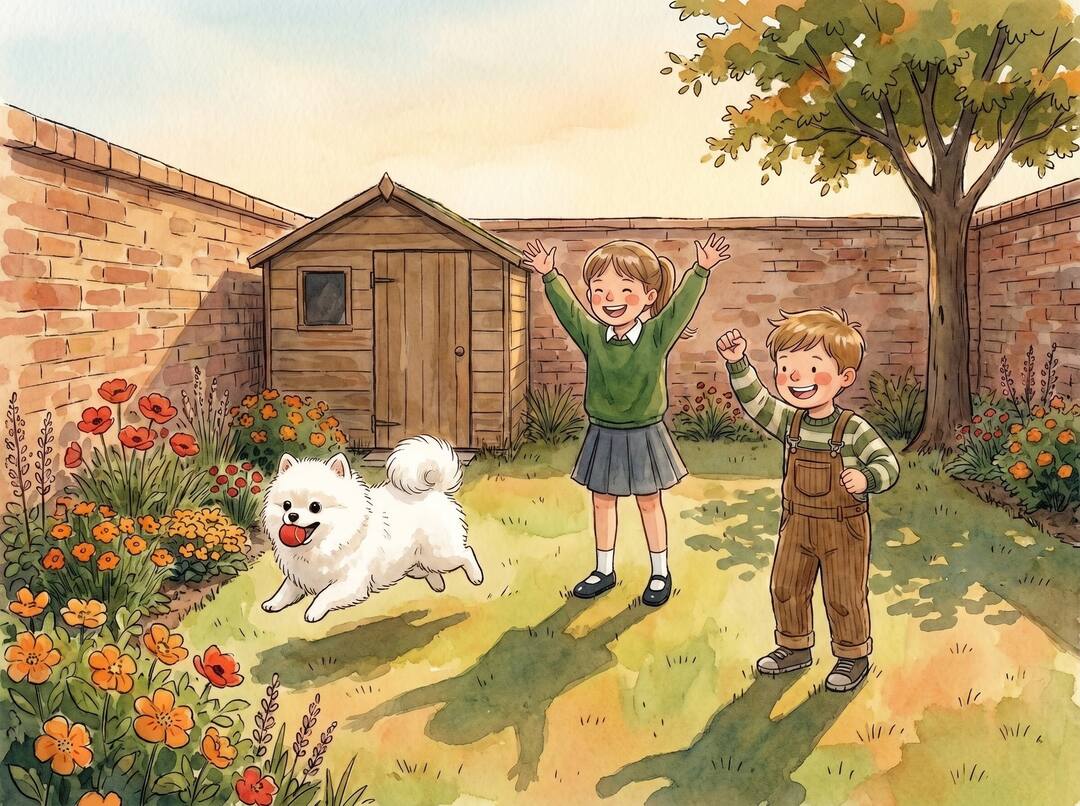
Home again Panels 15–18
Back to the kitchen, changed by a little. The day is told back.
These four movements are the story shape inside a single episode. They are not the four steps of First Steps — those are difficulty tiers across the whole band, and they live on the ladder.
The repetition is the teaching
Children's stories have always worked in threes — three knocks, three tries, three bears. Outloud uses the rule of three as an engine. A pattern arrives, returns, and returns once more, and each time it comes back the child can do a little more with it. By the third time, the words that were brand new in panel four are the child's own.
It never reads as drill, because it is a story doing what stories do. But under the surface it is spaced, structured practice — the same shape a good teacher would choose, built into the telling.
Two voices: a narrator, and a cast
A narrator reads the prose. The cast speak their own lines, each in their own voice. The child hears the difference between description and speech — between “Maya looks in the garden” and “There he is!” — long before anyone names it grammar.
Elm Park · Episode One · an extract
It is Saturday morning. Maya is in the kitchen. Mum is making toast.
Maya: “Mum, where is Bear?”
Bear is not in the kitchen. Bear is not under the table.
Mum: “Look in the garden, Maya.”
Maya looks in the garden. Billy looks too.
Billy: “Bear! Where are you, Bear?”
And then — a little white tail, behind the red flowers.
Maya: “There he is! Good boy, Bear.”
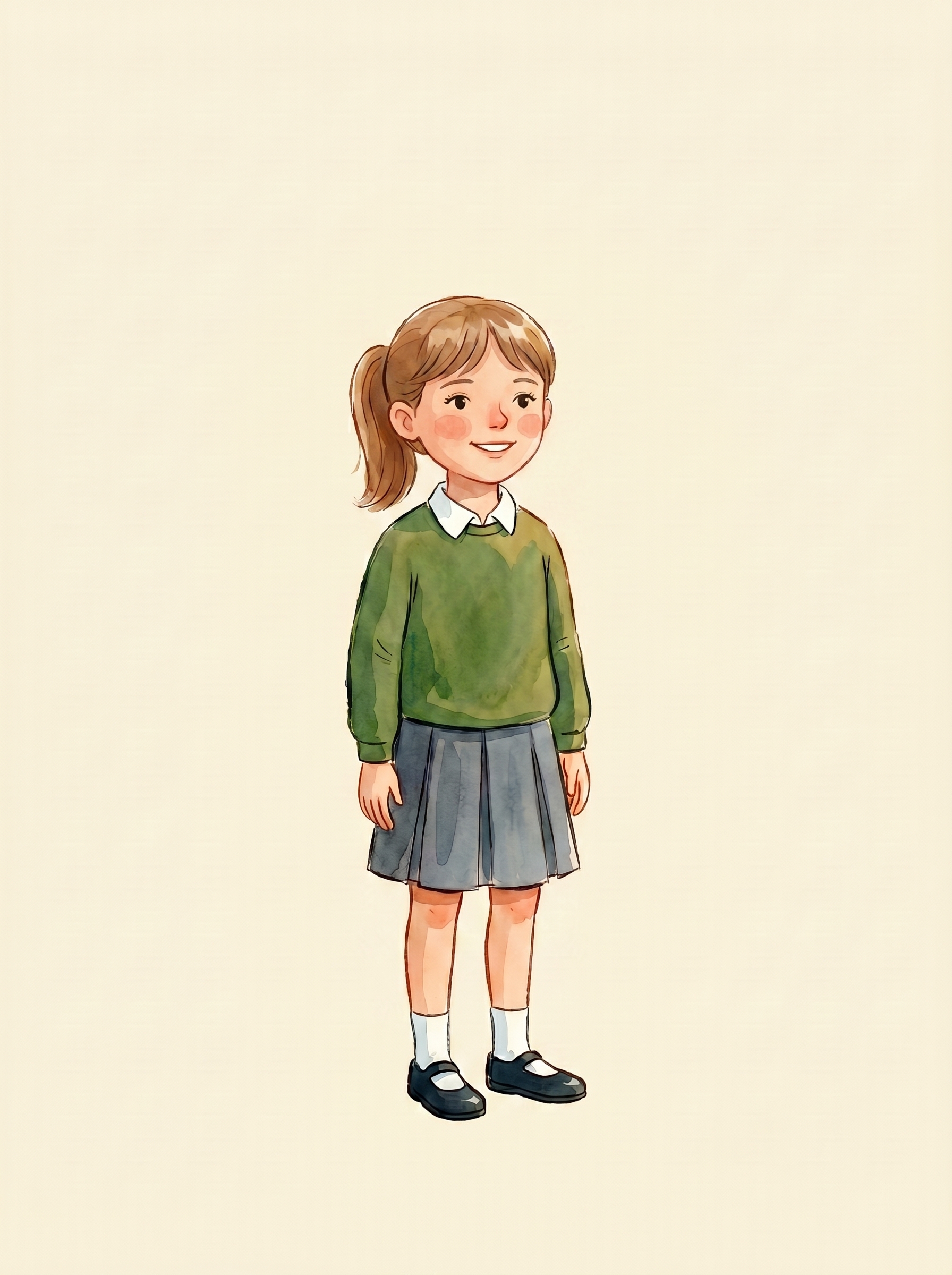 Maya
Maya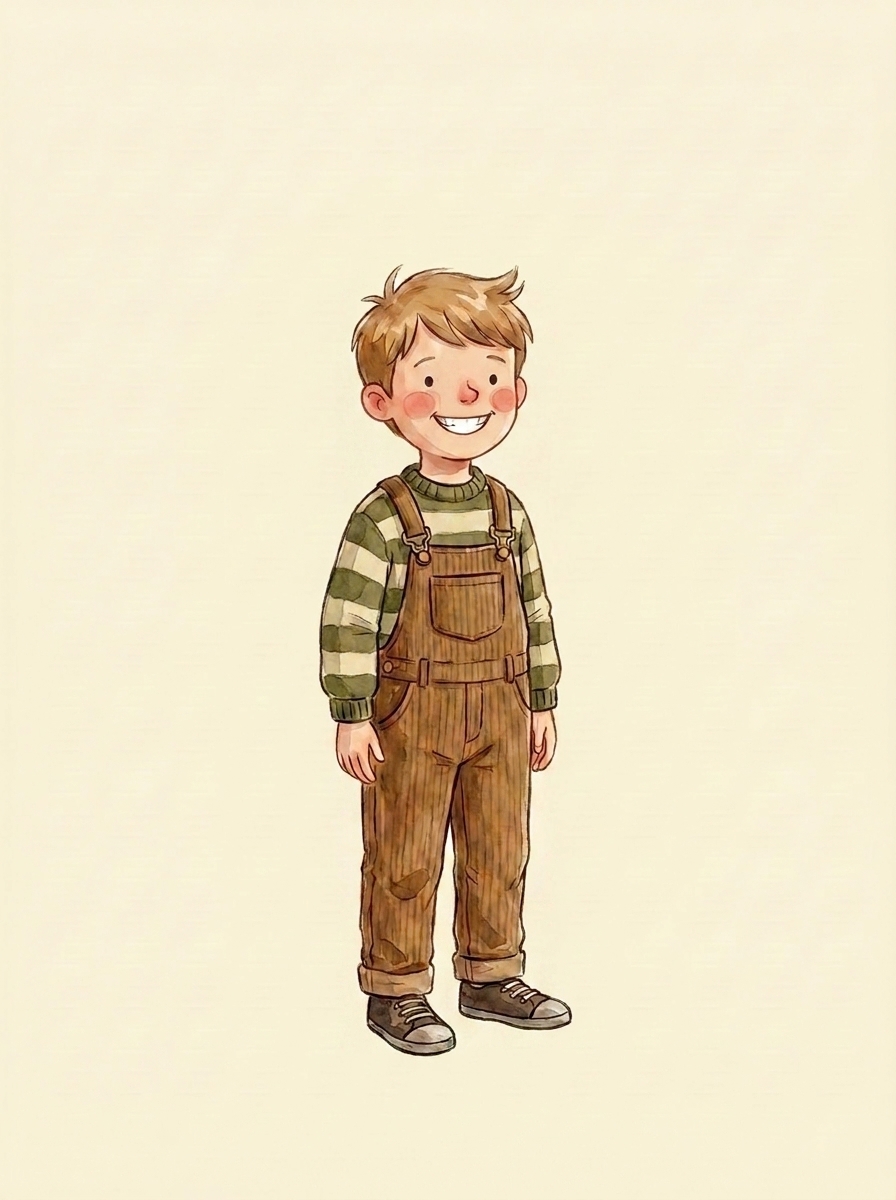 Billy
Billy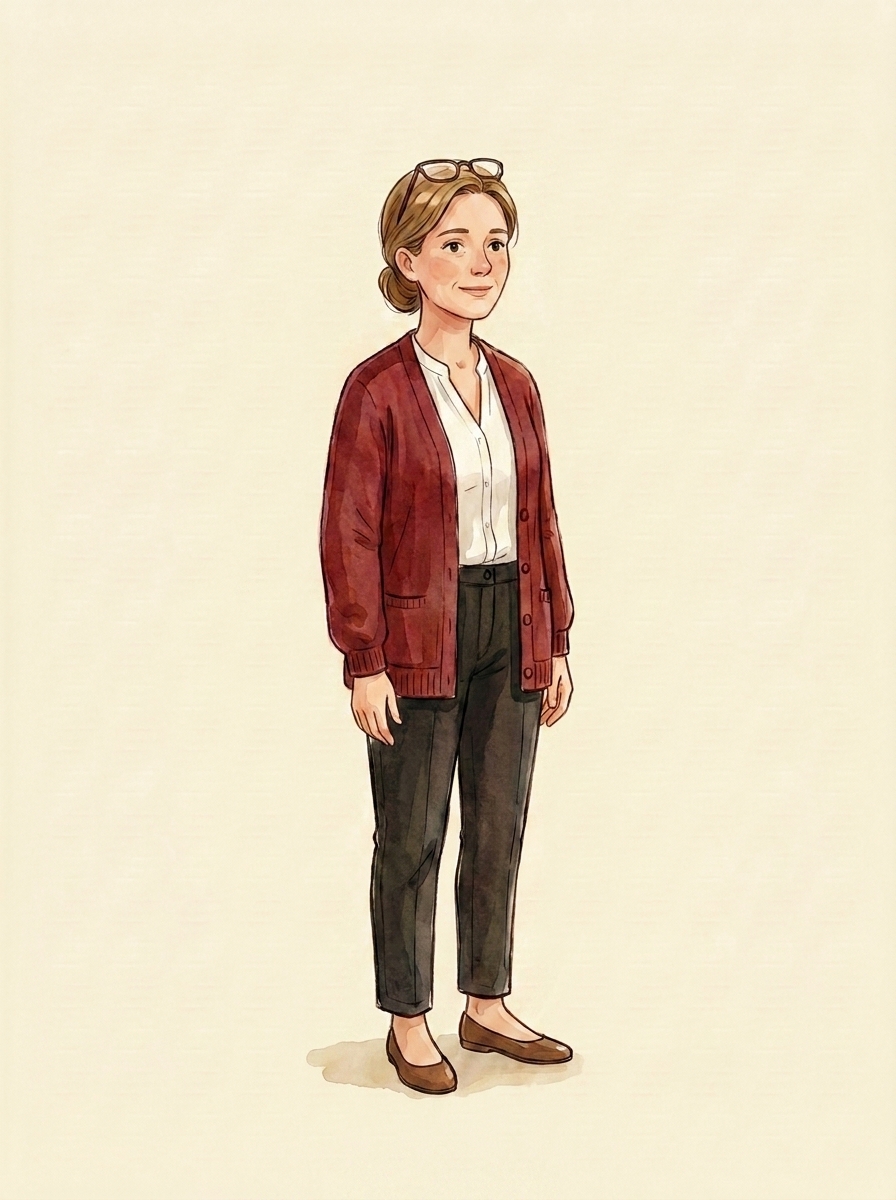 Mum
MumWhere the child speaks
At the end of a movement, the page waits. Maya asks the child a question, or a line comes up to be read aloud. The child speaks; the voice is recorded and listened to across five dimensions. The result is not a star or a streak — it is a small, precise update to where the child sits on the learning model, which is what decides the next thing they see.
- Accuracy
- Did the grammar hold — the right word, the right ending?
- Pronunciation
- Were the sounds clear enough to be understood?
- Fluency
- Did it come out in a steady line, or in stops and starts?
- Vocabulary
- Was the word reached for the right one, and was it stretched?
- Content
- Did the answer actually say something — was it on the question?
A given response only scores the dimensions that apply to it — reading a line aloud says nothing about vocabulary choice, so that dimension stays empty. A child's position is a shape across the five, not a single number. The science page goes deeper →
An instrumented storybook
A normal storybook is the same for every child and knows none of them. Outloud's knows this child's position and picks what comes next from it.
The story is the engagement layer — the part the child loves and returns to. The model underneath is the intelligence layer — the part that makes every session land exactly where it should. The child only ever sees the story.
The child finishes a story they wanted to finish. Underneath, the model knows them a little better than it did this morning.